Mother of four boys, aged 5 to 16. I suffer from depression and anxiety, and I have ADHD. Writing about my thoughts and experiences helps me to process through them and connect with others who resonate with the things I have to say. I always find my thoughts returning to my Savior and Redeemer of my Soul. He has led me through my recovery journey and I depend on him every day to help me through. As I feel his love and speak of his healing, my own burdens are lifted. Even so, the depression continues, and probably always will, which is why I will always be his broken-hearted hand-maiden.
Motherhood is the hardest thing I’ve ever done. No one wants me to get it right more than I do, but the reality is, there is no social consensus about what good mothering looks like in the real world. I do the best I can, but I know I fall short each day.
Today after I took my three year old in for a doctor’s appointment, I decided to take him shopping with me at Sam’s Club. Usually I don’t go shopping with my kids. I spend too much and it’s exhausting! Today it just had to be done, so I lugged him along. Leaving the store, I pushed the cart while calling for him to stay nearby in the busy parking lot. When I got the cart settled so it wouldn’t roll away, I tried to get him into his carseat. He cried and arched his back. He wanted a drink. I told him I would get him one after I buckled him in. He continued to fight me, so I gave in and handed him the cup. He looked at me murderously. He wanted to get it HIMSELF. I walked away in frustration to return the cart. I jogged through the parking lot, hoping that he had stayed in his seat. When I got back, I buckled him in listening to him lecture me about how frustrated he was at me. I asked him what he wanted and he said, “A drink.” I gave him the cup and insisted he say thank you.
I finally got him down for his nap and after I left he turned over the bookcase and the changing table in his room. He does this frequently when he is overtired. I was mad, but relieved he wasn’t hurt. I want the behavior to stop. It’s dangerous makes a huge mess. What do I do?
I stayed in the doorway seething, and I said, “Austin, when you do this, I feel angry. It makes me want to hit you. I want you to take a rest and when you wake up we will talk about it.” I shut the door and sat down exhausted. I still have a kitchen stuffed with groceries from Sam’s Club. I’ve got to try to get the ambition to put them away.
I found out my sister-in-law sent an email to my husband a year ago. For a long time, she and I were allies and confidants against the predatory system. After the predator died a couple of years ago, she switched sides. She went on the attack in the email. She tried to make a case to Ben that I am an abuser with a serious gaming addiction. She knows that I have depression and that I’m trying to manage it. She’s had depression herself, but her criticism showed no empathy for my situation. Words stand out to me that cut like knives. She said all the things my inner critic says about me; that I’m no good, selfish, and a bad mother. I know in my mind that she’s a narcissist and that what she said is about her and not me, but it still hurts. She’s a part of the abusive system of his family. I’m the scapegoat and the truth teller. I’m the empathetic depressed person who is vulnerable enough to try to get help. That makes me weak to her and an easy target to criticize. I blocked her on my phone and unfriended her on Facebook. I don’t need people like that in my life. I listen to my counselor not the flying monkeys of an abusive system of narcissists.
Ben wouldn’t share the details with me about the email all this time because he was worried about the effect it would have on my depression. I understand why he did what he did, but I wish I had known how toxic she was. I let her have dinner at my house last month. I have a really hard time with feelings of betrayal, and I’m trying to process that. It also makes me wonder what other family members have been saying to him about me behind my back.
Tomorrow morning I can go talk to my counselor about all this, but in the meantime, I’m just trying to make it through the day. I prayed to the Lord to give me comfort and help me know what I can do to be a better mom. He comforted me saying that men and women in this world look on the outward appearance, but that his gaze penetrates into the heart and soul of a person. His judgement is just and he says my heart is pure before him.
So I can take comfort in that. The self that I am learning to love and accept doesn’t have the polish of a narcissistic projection. That’s okay because she is real and God sees her heart. There are some that look at me and judge me as flawed and unworthy. That’s okay. What they think of me is on them. It’s their business. I’m working to surround myself with people who will love and value me, especially my Savior. His love and acceptance is all I need.
For more info on flying monkeys in narcissistic abuse, here are some links.
It has taken a lot of courage to be as vulnerable as I have about the predatory system that I recently extricated myself from. My final post makes the first two seem mild. I share the most intimate details of the predatory system of which I was made privy. I imply that there is worse that I don’t know. If I have been treading on thin ice thus far, I am taking a jackhammer to it with the third post.
My courage has faltered. Why? The one thing that has tethered me to the predatory system has been my husband. He means more to me than anyone in the world. The marriage we have built together is not perfect, but it is good. We have a good life and our children are loved and cared for. My post will put both of us firmly in the un-enviable position of the scapegoat.
In Old Testament times, the Children of Israel would take a goat from the herd, ritualistically place the sins of all the people onto that goat and then drive it out to starve to death. This ritual is described in Leviticus 16. The scapegoat has become a metaphor for the truth teller within a dysfunctional family system. The scapegoat in an alchoholic family or a narcissitic family is often the person in the family who actually seeks professional help. In therapy, the scapegoat will reveal the family secrets and try to confront the lies and live more authentically. The family will react to this by minimizing the dysfunction, defending the narcissist, and try to discredit the scapegoat. If this doesn’t silence the scapegoat, they will reject and drive them out of the family. The family will then demonize them, rejoice in their failures, and sabotage their lives if they can. All the problems within the dysfunctional family system can be blamed on the scapegoat. If the scapegoat leaves the family, there is often a new person who is forced into the role. There must always be someone to blame to avoid confronting the delusions of the narcissist.
I have actually functioned as the scapegoat in this narcissistic system for a while. Since the narcissist/predator died, the dysfunction in the family has increased. (I explain why in my detailed account.) My empathy for the family members created a co-dependence that I have been working on in therapy. Because of the dysfunction and the depression that has resulted from the pain the narcissist’s behavior has created, I have fallen into a bad depressive episode. This depressive episode can then be used to demonize me and blame me for the problems in the family. Sometimes I am a figure worthy of compassion and pity, other times I am a villainous abuser determined to cage Ben and keep him from his family. I have grown weary of both roles. I have mentally said my goodbyes to each member of Ben’s family with the understanding that the only way a healthy and authentic relationship with them is possible is if the old dysfunctional one is good and dead. I have been ready for a while to tell my story and embrace my new role outside of the family system, but what about Ben? I am not sure he is ready. He has confronted many family members about the dysfunction and has taken heat for it. He has defended me and refused to buy into their lies. Still, I can’t post this without his full support. I have been thinking and praying and my mind has been enlightened to understand things I didn’t before about myself and about the predatory system I am leaving.
I go to see my counselor on Thursday. Ben is planning to come. Together, with the Lord, we will decide what should be in my third post. I know that Ben and I can withstand the worst consequences of telling the truth, as long as we are together with the Lord. Light and truth bring healing. Secrets and darkness allow evil to thrive. Please pray for me, my husband, and my therapist as we seek the Lord’s guidance.
For more information about Narcisisstic Family roles follow these links:
If you find that you have attracted a lot of narcissistic people into your life, you might be highly empathetic. Learning to embrace your authentic self and let go of rigid structures can help you release your potential and resist the urge to partner with a narcissist. I am working to do that as well.
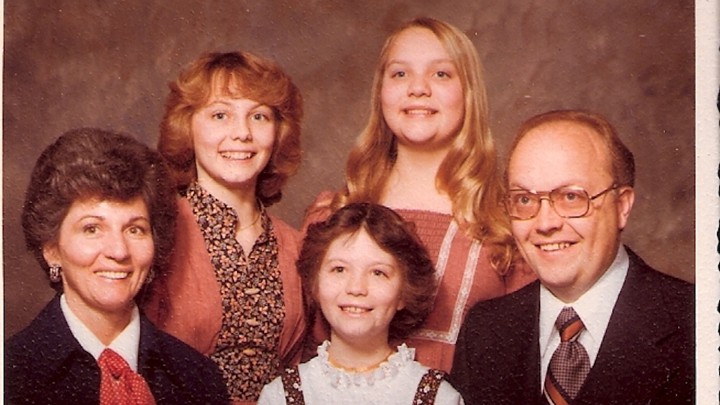
This family picture shows an ordinary LDS family in Pocatello, ID. They were targeted and victimized by predator Robert Berchtold.
I just finished watching, “Abducted in Plain Sight,” the documentary about Jan Broberg’s abuse by Robert Berchtold, the pedophile who kidnapped and brainwashed her as a teenage girl. The Broberg’s and the Berchtold’s were families actively involved in their LDS ward. Berchtold’s predatory behavior, as documented in the show, was enabled on many levels within the community. Social structures such as parents, church leadership, and law enforcement were ill equipped to confront Berchtold’s behavior. Although I believe we are much better now at protecting our children from pedophiles, this documentary is an important glimpse at our vulnerabilities and how a predator was able to exploit them. If you haven’t watched it, it’s currently on Netflix.
There are a few things that stood out to me. First, the total honesty of the Brobergs in their interviews was remarkable. The honest account of everything that happened, including their shockingly bad judgement, had the ring of truth to it even though it was incredibly bizarre. So bizarre, it defies rational comprehension, and yet who would make it up? The homosexual blackmail, the seduction of the mom, the multiple abductions of the girl, the bribing of the Mexican guard, the abysmal failure of the justice system to protect the public and this poor girl from her abuser, combine to make an unforgettable story. If it were fiction, I would think it too improbable to gain a wide audience.
I want to explore the ways that Robert Berchtold was able to manipulate the social structure of the membership of the Church of Jesus Christ of Latterday Saints to enable him in his crimes. He was a master manipulator who, as most predators do, was able to create a culture of silence through shaming his victims, hide behind a convincing facade of charisma, and finally twist the sympathies of victims and authority figures in his favor by casting himself as a victim.
First, he used shame as a tool to create a culture of silence. He seduced both of Jan’s parents and in doing so, he was able to blackmail them and dull their moral sensibilities. He had them so concerned about their own sins that they couldn’t see that he was orchestrating it all for his own ends. If they did see it, they felt powerless to fight it because he had fooled so many other people. He felt no guilt or remorse. He walked into the church building each week, took the sacrament, looked other members in the eye, while committing the blackest of sins. Predators sin with no remorse. They shame others while being themselves free of it. They entrap others in sin and then control them with guilt and threats. These are good people and often children who are manipulated, shamed, and lied to. They are kept in a haze of emotional exhaustion that keeps them from seeing what should be obvious. The problem is, it isn’t obvious, because predators are often incredibly skilled at living a double life and putting up a convincing facade that often includes societal status and money. That leads me to the second point.
Second, Robert Berchtold was able to use a facade of charm and financial success to mask the demon within. Members of the church are vulnerable to manipulation from flattering men who appear successful at business. There is something about the LDS culture that my seminary teacher observed many years ago. He mentioned it in class and I’ve never forgotten it. He said that many people see riches as evidence of God’s favor. We see someone who is wealthy and charismatic as righteous because he has success in the world. He said that you hear people in church mention that their money is a blessing from God. He argued that riches are no more a mark of righteousness now than they were at the time of the Savior. The reason I remember this point was because I was raised in the church and had never questioned that idea. “Of course,” I thought, “If you’re righteous God is going to give you money and success.” The dissonance of that seminary lesson has stayed with me, but over time I have found myself in firm agreement with my seminary teacher. In fact, I have often seen men who have power and influence, money and status, who have shown themselves to be predators both inside and outside of the church.
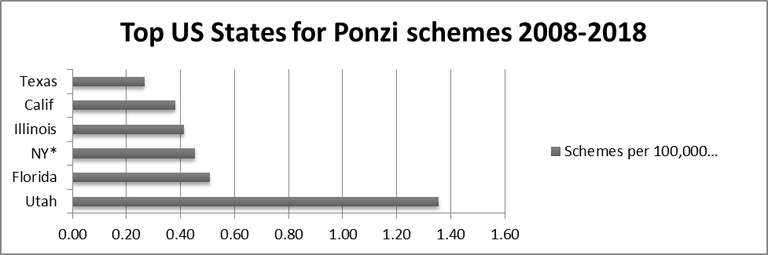
For anyone who is in doubt about the tendency of LDS culture to be vulnerable to the “money equals righteousness” fallacy, look at the fraud statistics. We are far more prone to involve ourselves in get rich quick schemes like network marketing, real estate schemes, ponzi schemes, or other high risk investments. Summer sales jobs are extremely common within our membership where promises of easy money are tossed out casually when the reality is often quite different. The Brobergs were good, simple, naive people who were vulnerable to the charismatic manipulations of a man who was nothing like them. Robert Berchtold was suave, seductive, an accomplished liar, and had most, if not all, of the church congregation and surrounding community convinced he was a good guy. Even after he abducted Jan and took her to Mexico, the church community was supportive of him. Why? Because they were victimized too. If a member of the church comes to us with a charismatic smile, a high profile calling, a good job, and a few flattering words, we are like putty in their hands. They victimize us and we are unprepared to defend ourselves. That is part of the reason Utah has the highest rate of financial fraud in the United States.
There was an article published in the Deseret News last April called, “Does Utah deserve the title of ‘fraud capital of the United States’?” It explains the reasons we as members are vulnerable to financial predators, but I suspect the same things could be said about our vulnerability to sexual predators. Thankfully, there is now a dedicated regional U.S. Securities and Exchange Commission office for Utah to combat fraud. It is the only state that has one. Hopefully that will help curb the trend. The state lawmakers have also stepped up creating a white collar crime offender registry similar to a sex offender registry to help inform and protect potential victims. As members, we can’t afford to be so naive as we have been in the past. It is time we started being as wise as serpents and not just harmless as doves.
The third point I wanted to make was how Robert Berchtold was able to manipulate the sympathy of those around him. He convinced Jan’s parents that part of his therapy for his pedophilia was to lay next to their daughter in bed alone with her. They thought by giving him access to their child that they were helping him recover. They were so consumed with fear and guilt that they felt obligated to sacrifice and do the “right thing.” Like Abraham offering up his son as a sacrifice, they were offering up their daughter to atone for their mistakes. I am convinced that the Brobergs not only allowed Berchtold’s abuse out of coercion, I believe they thought they were redeeming themselves. They were being charitable by allowing him to do this. This was AFTER he had abducted her and taken her to Mexico. I would find such manipulation to be unbelievable if I had not witnessed it with a predator and his victims in my own life. Skilled manipulators are able to convince their victims that they are the victims and that by enabling the abuse, you are doing a noble thing. If you call out their lies, you become the bad guy.
The manipulation of Jan was horrifyingly fantastic. He used the conditioning that we use with our children in the church to his advantage. He convinced her to believe a religious-like narrative in which her obedience to her omniscient alien parents would secure the safety of humanity. Her disobedience would bring calamity and destruction to her family. Children have an exaggerated view of their own power and are vulnerable to this kind of ego-centric narrative. By convincing her of this religious narrative, he made her into something of a cult member. Now, her parents were not only battling their own shame and their own sexual attractions, they were also battling their daughter who was as obsessed with being with Berchtold as he was with being with her. I can’t be certain, but I don’t think any of the Brobergs were aware of how other members of the family were being victimized until Jan was much older and no longer the object of Berchtold’s obsession. A culture of silence ensured that Berchtold was able to continue his abuse by isolating his victims.
So how can we, as members of the church, guard ourselves against these kinds of predators? First, we can say no to shame. There is no sin that is worth hiding. Christ has suffered for all of it. Confess it, forsake it, and give it over to Christ. The Savior can’t save us from the sins we hide. The scriptures say, “There hath no temptation taken you, but such as is common to man.” We all sin. Let’s be real about it and deal with it rather than obsess about what other people will think if they know. Predators take the mistakes people make, sometimes mistakes that they set them up to make, and use them as blackmail. If enough church members say no to shame and embrace the reality of the Savior’s atonement, those threats lose their power. The forgiveness of the Savior is empowering to victims. It allows us to regain our confidence and emotional strength which we can use to fight the abuse.
Second, we can learn the lesson my seminary teacher taught me all those years ago. Money and charm do not equal righteousness. Yes, most members with high callings have good jobs and nice stuff. It’s easy to think that the trappings of Earthly success are the mark of God’s favor. This becomes a kind of materialist faith in which God is a banker doling out material blessings to the faithful. The truth is, callings, money, jobs, and all the rest are what people see. God looks on the heart. None of that means anything to the Lord. There are plenty of our members hiding in high places in the church community who have black hearts. They can be doctor’s, lawyers, judges, church officials, and politicians. Sometimes they are brought to justice in this life and sometimes they aren’t. As disciples of Christ we need to start seeing one another as He does and not as the world does. If we do, we won’t be as easily deceived.
Third, we can talk to our kids about predators. We can tell them that it is never okay for an adult or anyone to touch them sexually. We can warn them of people who might use the church or other religious ideas to manipulate and victimize them. Before we can talk to our kids about predators, we have to be willing to accept their existence ourselves. The Brobergs seem like stupid people for believing the lies they were told. In truth, the only reason they believed Berchtold’s lies was because they wanted to believe them so badly. They wanted to believe that LDS men who go to church and have wives and families are good people who can be trusted with children. We cling to the illusions we want to have about the world and the dangers we are surrounded with. We don’t want to believe that evil exists and that it can take the shape of something that appears harmless and wholesome on the outside. We want to believe the false reality we believed before the evidence showed something else. If that means ignoring, minimizing, or denying that evidence, we will do it. Anyone can be a victim.
I’ve seen people manipulated by predators. I’ve seen entire family systems under the control of predators. It happens. I’ve been manipulated by them too. I’ve felt the guilt and shame of being a part of an enabling system; trapped in a false reality where good is evil and evil is good. Speaking lies is required; speaking truth is blaspheme. A culture of secrecy and silence keeps us from being agents of change to make our society better. As the world becomes more wicked and our national social fabric unravels, abuse will become more widespread. The internet makes the whole world a stalking ground for the predators of the world. We need to arm ourselves against the evils of our time. We need to say no to shame, no to materialistic religion, and no to a culture of silence that feeds the illusion that it doesn’t happen in our church.
When I was being manipulated by a predatory system, I knowingly put my children at risk. I allowed the predator access to my little boys because I was shamed into thinking that if I put up boundaries to protect them, that I would be hurting the predator’s recovery from depression. It was hard to open up about the situation. I felt like I couldn’t even write the truth in a private journal. I couldn’t even pray about it out loud. I wished I could just forget the things I had seen, heard and been told, but they kept intruding into my thoughts. The truth would not be denied. I broke the culture of silence. I talked to my bishop and my therapist. I prayed and pleaded to know what to do. The answer was unanimous. I was to protect my children. I did. I put up boundaries. When questioned by enabling family members, I was rejected. They denied telling me things I knew they had told me. It was implied that I was fabricating stories I would have never made up and wanted to forget. Even then, I desperately wanted to preserve a relationship with them. I stuck to the boundaries I had set, and to my knowledge, my boys were not harmed. I and they were lucky. I’ve overcome the need I felt to keep the secrets of the predatory system I was a part of. I don’t need to protect their secrets anymore. If any members of it read this, I suspect they will have no doubt of the identity of the predator. If they choose to read my next post in the series, there will be no doubt. They may be angry at me for tarnishing his memory, and that’s okay. I am done with playing this part.
He was a lifelong active member of the church who held many callings. He taught elementary school in two different states. He married in the temple and had six children. He also sexually victimized women and girls for decades. I don’t think anyone outside his immediate family knew the truth, and we were all shamed and manipulated into silence. We were told he was not responsible for his acts and that he had repented, and yet the behavior continued. If we did not forgive and forget each new offense, we were hurting his recovery from depression. We were judgmental and unforgiving. He wasn’t on any sex offender registries and had no criminal record. He was smart and careful and was the most manipulative person I have ever met. They are out there. We need to be honest with ourselves and others about the reality of their existence. We need to be aware of the grooming behaviors that predators use. We need to be vigilant and refuse to ignore the warning signs. It can happen and it does happen in our churches and in our families.
I bring my personal story of a family predator into the discussion, not to speak ill of the dead-he is deceased- or pass judgement on him. I leave that in the capable hands of my Savior. I bring my personal experience in to show empathy to those who are victimized by predators. Some watched this movie and had disdain and revulsion toward Jan’s parents. I don’t. I disagree with the choices they made, but I understand why they made them because I lived in a social system that was controlled by a manipulative narcissist. I’ve seen first hand how it works and why it works. We rely on the people around us to give us a sense of what truth is. If what we see is drastically different than what those around us seem to see, we question our own perception. It is only as I have cultivated a relationship with my Savior and consulted with mental health professionals that I have found the confidence to challenge the social systems around me. Even then, it takes tremendous courage. Even as I write this, I have to remind myself that I am not obligated to keep the family secrets. The denial is still strong with many members of the family and they can choose to live in it, but they don’t get to write my story or keep me from telling it.
As I live my life, I am amazed when I find victims who are strong enough to tell their stories for the benefit of others. Jan’s resilience and strength is incredible to witness. My favorite part is at the end when she confronts her abuser in court. He tries to imply that she is motivated by book sales and fame. She tells him coldly that she is motivated by the desire to expose predators like him to the world. She has become a powerful advocate for child victims because she and her family had the courage to face the truth about themselves and what happened to them. In some ways, her parents have had to have even more courage because their experience is less likely to elicit sympathy and more likely to elicit judgement and condemnation. Their willingness to submit to that judgement rather than lie to themselves and others about what they did has made Jan’s recovery and the family’s recovery much more complete. Secrets and lies destroy. The truth, even when it is uncomfortable, sets us free.
The only way we can destroy the evil among us is if we talk about it. I hope my words help to shine a light on a problem that we face within our membership. As we confront evil with courage and honesty, as the Brobergs did, the Savior can heal us and those we love. His grace is sufficient for us! His angels stand ready to assist us as we take the steps necessary to purge the church of the evils of abuse. A culture of silence polishes and shines the outside of the cup while allowing filth to grow and fester within. Christ wants us to be better. Let us roll up our sleeves and commit ourselves to battling the abusers in our midst and purge their behavior from among us. Let us clean and sterilize the cup on the inside. That is what the Savior would have us do.
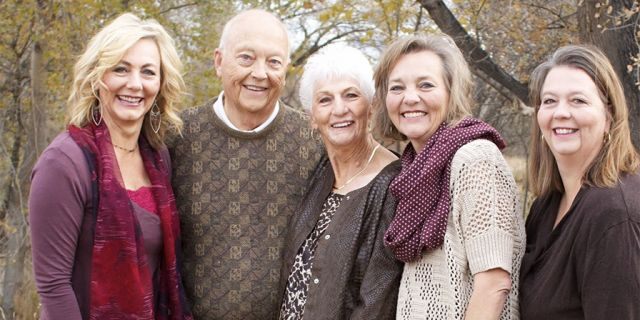
This is the Broberg family today. They have accepted the reality of the abuse and worked together to bring their abuser to justice and support Jan in her complete recovery. Lesser families would have denied and hidden the terrible truth of what happened and what they did to allow it to happen, but instead they become advocates for abuse victims by sharing their story for the benefit of others. They are a model for the rest of us that hope and healing are possible when we confess and forsake our sins. Abuse happens in families, but the Broberg’s show that there is healing and hope through our Savior who has the power to save.This is Jan Broberg’s Twitter photo. This beautiful vibrant woman is a survivor and a warrior. Through her faith and resilience, she has recovered from her abuse, forgiven her family, helped lead them to healing, and become a personal hero to me.
I wrote a post over a week ago that I have discussed some with my therapist and my husband. It is a pretty vulnerable post that lays bare some stuff from my past that may bring some repercussions back on me. Before I post it, I want to be emotionally prepared for the choices some people may make that will hurt me.
Eighteen years ago this month, I married a wonderful man in the Salt Lake Temple. I knew a little of the problems within his family of origin when I bound my fate with his that day, but I had no idea the many challenges that would lie ahead for us and the tremendous courage and determination I would have to have to survive; to protect myself, my husband, and my children from the web of deception and victimization I entered into.
First of all, I want to say that if I had it to do over again, I would still marry my husband. He has many good qualities and when horrible choices had to be made, he has done the right thing. I don’t blame him for the situation, I only admire him for the courage and loyalty he has shown to me as we have worked together to forge a better family for our own children.
This three part series of posts is about abuse, particularly abuse within the LDS community. By this I am not talking directly about the Church of Jesus Christ of Latter-Day Saints. The church itself is one facet of a much more complex social system that has arisen around it. My observations have been that abuse within our membership is not systematic. It is not like Warren Jeffs or David Koresh where the leadership is abusing the congregations. It is more like the abusers are like parasites that live and profit from church structures while disguising themselves as faithful members. They create and thrive within a culture of silence and manage to deceive and foster sympathy from leadership and get access to victims. Because of vulnerabilities within our system that make it easier for them to operate, they thrive and often receive inadequate consequences if any at all. The Lord is not pleased. We can do better.
This is not to say that the church is bad or that the doctrines are incorrect. I am mindful of the man who tried to steady the ark in the Old Testament, and I pray that my Savior will have mercy on me as I tell my story in an effort not to fix His church, but to help the fallen souls who bare His name in this world. There is a difference between doctrine, ordinance, and authority, and our poor efforts to put them into practice in a fallen world. If we can help one another purge sin that has taken root within our society, we will all be blessed.
Much like the Jews at the time of the Savior, it wasn’t the law of Moses that Jesus Christ rejected and criticized, it was the cultural traditions and practices that were sinful and harmful that he confronted. In the end, the law of Moses was fulfilled and new ordinances and practices were put in place. Similarly, we believe that Joseph Smith, the American prophet of our time, was sent to restore sacred truth, confront harmful interpretations, and lay the foundation for a better society that would eventually become Zion, the New Jerusalem. One of our mandates as members is to work toward the “perfection of the saints,” and the realization of that Zion society in which we live in perfect harmony with God’s law. In order to bring Zion to reality, we must confront uncomfortable truths. We must bring sins from the darkness into the light. We must reject the culture of silence.
So that is why I am writing this post. Abusers create webs of lies and entrap their victims with confusion and helplessness. There are victims within our membership that have been willing to share their stories. Patrick Risk is one of them. Jan Broberg is another. I am now sharing my story. I am a relatively minor character in this drama. The predator that I became entangled with revealed himself to me early and that protected me from his manipulations. I watched him for years feeling helpless to protect myself or others from him. I have many regrets about what I didn’t say or do and that is part of why I want to tell my story. I want some relief from the guilt I feel. Hopefully as we share our stories we can embolden present and future victims and give them courage to fight abuse. It is much harder to do than you might think.
My second post in this three part series is mostly about Jan Broberg and the documentary I watched on Netflix. It has created a lot of emotional turmoil as I have processed through the experiences I have had in my husband’s family and the trauma I have experienced both directly and vicariously through the suffering of those I love and have considered family for the past eighteen years. This post has several practical principles that if applied correctly, can help us cleanse the church of the predators that live among us.
The third post is a detailed account of the predator in my life and his activities from my viewpoint. I have tried to avoid the use of names to identify individuals. This post is not intended to shame anyone. Even the predator himself was part of a larger system in which he himself was victimized. What I was told and what I saw is what is written in the third post as accurately as I can remember it. It’s purpose is to inform the reader of one example of an abusive predatory system that was protected and enabled within an LDS family.
I went to linger longer today. For those who aren’t familiar with it, linger longer is a ward activity that involves staying after church for a potluck meal. Potluck meals are a pain when you have young children. You have to make sure they get something healthy to eat, that they are playing nicely, and that they don’t decide to go eat off other people’s plates…..or tip over the buffet table. As you socialize with people, you have to have part of your brain always monitoring your kiddos. Is that kid screaming mine? Or did he cause some other kid to scream? Is that my kid with the mountain of dessert on his plate? Then I’m always worried I’m going to zone out in the middle of a conversation and embarrass myself. With a big family, there is the problem of where to sit. We have large round tables that seat about ten people. With a family of six, we usually share a table with another family, but it can be tricky to make sure you don’t take too many seats or wind up with a couple of kids with no where to sit. That’s just awkward!
Anyway, when my depression/anxiety got bad a year ago, I told Ben absolutely not. Even when my sons would beg and cry, I said no way. Then when things deteriorated with the Relief Society, I didn’t know if I would ever go to a linger longer again. The smell of the food in the church house would make me feel ill. The fact that we actually made food and stayed the whole time and I didn’t panic and run to a classroom to breathe into a paper sack, is remarkable. I actually had a good time. I introduced myself to a family that moved in recently. I mingled. It was good! There was anxiety. I didn’t eat much. There were moments of awkward wandering, but it was overall a pleasant social gathering.
So I’ve done some hard things lately. I’ve started the school year. I’ve been tackling my procrastination list. I’ve been socializing more. I went to a pool party, helped clean a sister’s house twice, and went to a friend’s birthday lunch. Being more present with my ward family and more socially conscious has been a growing experience that has moments of discomfort, but overall it has been good.
I was thinking today about my last post about sisters posturing. Honestly, I’m not sure I didn’t participate in the posturing. As the sacrament was going around, I did some serious introspection. My mind was exploring the idea of female posturing and whether or not if I had participated in it. If I had, was it a sin. I decided that I didn’t think it was. Then I had a thought come into my mind that I think was inspiration. I’m going to try to explain it using a math metaphor.
So I was concerned about the possibility that I had engaged in the posturing I had observed at the cleaning activity. Then, if I had ignored my own participation in it and yet written about others engaging in it, that would have been quite rude and dishonest. But upon introspection, I couldn’t remember for sure whether I had or not. I know I didn’t engage with the sisters with authenticity. Instead, I kind of detached and tried to focus on the tile grout. The epiphany came when I realized that it didn’t matter whether I had postured or not. The fact that I was moving toward authenticity was what God cared about. This idea of movement or trajectory is what caught my mind and then I began to put the pieces together.
I stayed up late reading the scriptures. I can’t remember which chapter it was but it was Paul writing about the adoption of the Gentiles and how the Jews were the covenant people and that they were blessed and favored of the Lord, but then they lost that position and it was given to the gentiles. Paul’s style is very complex and analytical, but the spirit was with me and the meaning that the spirit was revealing to me was very clear. God doesn’t care where you are. He cares about your trajectory. Because he sees us not as a point in space, to use my mathematical metaphor, but from an eternal perspective, it is more like a line. Our past is one point on the line. Our present is another point. Our future, is the third point. God cares about what our trajectory is. Are we on a negative slope? If so, the Lord is not pleased. We need to repent. If our trajectory is positive, the Lord is pleased. Of course, we want to try to make the slope as steep as we can, but the crucial thing is, as God, he sees the slope; while as mortals we only see the present. We see the dot on grid. He sees the line.
Lines can communicate a lot more than points. If we see where a person is coming from and where they’re going, we can understand and love them more.
When I look at the scriptural history through this metaphor, that chapter I read is very clear. Consider the Jews at the time of the Savior. They occupied a privileged place. They obeyed the law of Moses as they interpreted it. They looked forward to a Savior to deliver them from Rome and other political oppressors. They were imperfect, but compared to the gentiles, they were high on the graph. Then the Savior came to give them a higher law, to show them a better way, to invite them to change the trajectory of their spiritual growth. Instead of accepting this invitation, they rejected him and then killed him. This put their trajectory severely negative. The Savior put them beneath even Sodom and Gomorrah because although the Jews were superficially righteous, they were unwilling to change their trajectory. They insisted on rejecting the opportunity to repent and usher in new truth into their system. It is recorded in several places where the Savior marvels at the faith and obedience of certain gentiles he comes into contact with. Although he never taught in gentile cities or ministered outside of Judea, he understood that the time would come after he was rejected and murdered, that his gospel would be given to the gentiles where it would spread and grow, changing the spiritual landscape of the world.
As a personal application, I see myself having my emotional and spiritual ups and downs. I know where my dot is on the graph, but I also see my trajectory. I’m on a solidly positive slope. Did I posture in my interactions with the other women? Perhaps. Was I dishonest with myself and with them, hiding behind a mask of deception? Perhaps. It doesn’t really matter as long as my dot is moving toward authenticity. If it is, that is all that matters. I’m not going to attain perfection in a day. I’m going to fall short of the ideal that I am working toward, but I need not become discouraged or ashamed.
This is a big breakthrough for me in having compassion toward myself and others. It also helps me to understand the Savior’s interactions on this Earth. He didn’t see the harlot, the publican, the fisherman, the leper, the pharisee, etc; he saw their past, present, and future. The harlot’s dot was low on the graph and that was all the pharisee could see. The Savior saw her humility, her willingness to repent, her desire to improve her spiritual and emotional condition. He was impressed not by her position on the graph, but on the trajectory of her line. In contrast, the pharisee’s dot was high on the graph, but his pride and his treatment of the Savior put his trajectory in the negative, prompting the Savior to correct him.
I’ll use another example that has some political overtones, just to keep things interesting. Let’s consider those who come to our Southern border seeking asylum. They are low on the graph. Most of them have little to nothing in the way of personal possessions. As our President has so cruelly observed, they come from “sh*thole countries.” Still, the wise investor doesn’t look at companies that look sucessfulsuccessful in the present. The wise investors look to the future to see what the company’s potential is given a place in sufficient support and investment. When America is at her finest, she welcomes the refugee and the immigrant knowing that those who have the fortitude and determination to come to this land usually have the potential needed to be successful here. Their success has made America the greatest country in the world. By closing our doors to them, we deprive ourselves of their potential while also earning ourselves a rebuke from the Savior.
When the Savior teaches that the last shall be first and the first shall be last it always makes me think. He is perfectly fair and just. He is no respecter of persons. He sees me as a line, not a point. I hope that I can learn to see others that way as well. I hope that as I live my life that I can be the person who is a friend when the chips are down, a confidant when the truth is hard to share, a comfort to the one who is sitting in a dark place. If I can do those things, perhaps my Master will be pleased with me.
Today I helped a new sister clean her house before she moved in. I usually never do stuff like this, but I decided to today for several reasons. For one thing, this lady was assigned as one of my ministering sisters. Another thing, is I am trying to be supportive of the new Relief Society presidency. Another thing is, it’s good for me to serve and socialize even though it isn’t my favorite thing to do.
When I arrived, I saw familiar faces from church standing in a circle and chatting. I had just dropped off my baby with the sitter and was eager to get started, but I engaged a little in the small talk about the house. I thought it interesting to see how each sister chose a different part of the house to clean. I chose the tile grout. Why?
I like getting deep into the dirty parts in the foundation. A clean floor is a clean house to me. Other sisters wiped out cupboards or did other stuff. I didn’t really pay attention to them. I just focused on my job. As I listened to the other sisters talk, I thought about all the reasons I don’t fit in. I remember long ago my counselor talked to me about women and the way we compete with one another for status. Being thin, pretty, a good housekeeper, a devoted mother, having a wealthy husband, having a successful career…..these are all values that we compete in. Inevitably, I find myself feeling inadequate as others jockey for position within the female social framework. Why? I am reasonably thin, well educated, and otherwise successful. What makes me ashamed? It is self-knowledge.
Self-esteem has always been a tricky thing for me. You can’t esteem what you don’t understand and I don’t really know myself. This depressive episode has charted more territory in my self-discovery than ever before, but I don’t always like what I find. Self-discovery can be painful when I confront my own illusions, my motivations, my fears, and everything else that I prefer not to look at. Also, as I discover more about myself, I realize that who I am is not under my control nearly as much as I wanted to think it was. I am a product of forces like my community, my family, my genetics, my habits. These things are like concrete. At one time, they may have been flexible and moldable, but over the course of the forty years I have been alive, they have hardened into the shape of me. This shape I am still discovering, but one thing I am certain of: no amount of working out at the gym, reading to enrich my mind, or self-improvement effort is going to make me over into the person who can, with authenticity, present myself to others as anything but a deeply flawed person. I am convinced that the only way I want to live is with authenticity, so I don’t have much to say in superficial conversations that seem to involve posturing.
This is tricky territory I am wandering into. I don’t want to imply that I am judging and condemning other women for their posturing. I would just as soon condemn my dog for licking her bottom. It is what dogs do. As women, we posture and compete and jockey for position. It’s what we do. I just don’t do it and I never really understood why before, but today I think I made some progress. Sometimes I thought something was wrong with me and that was why I seemed disinterested, discouraged, or even annoyed during these social interactions. Now I see that what is right with me is what is wrong with me. My own self-knowledge of my flaws, coupled with my determination to live with authenticity, result in my overall disenchantment with superficial human interaction in general.
So what I thought in the past was social anxiety, seems to be to be something else. It is a tendency toward self preservation; a need to live authentically and be accepted for who I truly am, not for a projection I’d like others to think I am. So as I scrubbed the stains from the tile floor, I considered myself, in that space, being me, observing the other sisters around me, and seeing everything from this new perspective.
And then, I started thinking about the people who were not there–the previous owners of the home. Of course, they had foreclosed the house and left it in a sorry state, so no one was very complimentary of them. We were engaged in cleaning the grime of years that had accumulated in what had been their home. Then the thought occurred to me, that these faceless, nameless people had been in our ward. They were not members of the church, but they had lived in my ward boundaries and as such, they were technically in my ward family. They had struggled and suffered and lived out their days in my neighborhood and only now did I spare a thought for them. Why was I cleaning their house now, and not months or years before? Why was this family worthy of my help and the other wasn’t? Were they not just as loved by their Heavenly Father? At this moment, that family is probably moving into another home somewhere, but surely God is aware of them and loves them just as much as he loves me. Seeing myself within this picture of other divine children both on the covenant path and off it, helps me to understand my own place in this world and what he would have me do. I’m not the woman I wish I were, but perhaps I am who he needs me to be.
That is where grace comes in. I am not the woman I wish I were. Still, the Savior died for me. He loves me that much, so I can give myself a little grace. I can look into my dark places and give myself some forgiveness that I fall short. I can restrain the inner critic and unleash the inner nurturer and allow myself to be; to exist without judgement. There is no greater gift one person can give another; suspended judgement.
When something imperfect is allowed to exist, it reminds me of the plan of salvation and the wisdom of my God. He created this world, an anomaly within the cosmos, a temporal vaccuume in the fabric of eternity, a place where justice and perfection are suspended and sin and death are allowed to exist. This place, the training and testing place of the spirit sons and daughters of God, is a crucible of pain and growth. One of the hardest things to learn in life is to do as God has done. To suspend judgement. To allow our fellow men to make their choices and love them regardless of what those choices are and how they affect us is to approach the throne of God himself. That is what he has done. He suspends his judgment until the end. He has given us the hope of salvation through the sacrifice of his son. And he waits. He waits for us to find ourselves and one another in the mess that is this world. He waits for us to feel after him and remember ourselves; not the shallow images of our vain imaginations, but the God that lives within us. He waits. He waits for me.
The day after school started, I was sitting on the couch watching T.V. My mind was going over and over all the things I should have been doing, but I felt unable to stand. Austin was down for a nap and Pepper was sleeping in my lap, but this was more than just an afternoon mood slump. I felt overwhelmed, anxious, and paralyzed.
The first day of school is something I look forward to and dread at the same time. The major shift in routine and schedule is hard for me, and then I worry about my boys. Are they safe? Are they with their friends? Is their teacher(s) going to provide them what they need? There are a million reasons to feel anxious on the first day of school.
In the midst of this mental turmoil, I gave myself some compassion and encouragement. Then, I engaged in some much needed self care. I took a bath and washed my hair. The triple digit heat the last few days had left me feeling sticky and gross. Then Ben and I made a plan for how to help me get through the next two weeks until preschool starts for Austin. Ben made dinner and I signed papers and gathered school supplies for Devin. We went to bed early.
In the morning I had some dreams, which I recorded. I dreamed I went on a bike ride in Sugar City, Idaho, where I grew up. I was with my kids. I stopped to pet a couple of dogs that didn’t have teeth. They belonged to a Mormon family with lots of kids who were all piled on a single bicycle. They looked happy and seeing them made me happy too. Then I went to Walmart where my kids ran off. I felt overwhelmed and used positive self-talk to motivate myself to complete the shopping, gather my children, and ride my bike home again.
According to Google research, bike riding symbolizes being an active participant in life and taking steps to reach your goals. Dog teeth symbolize power and virility. They fact that they belonged to a Mormon family might mean something about the way I see the people of my faith. Perhaps I see them as defenseless against danger. Perhaps the image of them piled on the bicycle is indicative of my idealized version of a Mormon family, everyone happy and balanced. The Walmart trip and the feelings I had there mirrored my depressed and overwhelmed feelings the day before. The positive self-talk was helpful to me in my dream as it had been in my waking life.
The next day, I knocked some things off my procrastination list, made some contacts for babysitting, and watched a movie a friend loaned me about watercolor painting. I made it through a tough patch, and I am still functioning and I credit that to my self affirmations and self care.
We talk a lot in my church about financial self reliance. That is important. Lately there has been a twist on the concept to include spiritual self-reliance. I think there is something to be said about emotional self-reliance. Learning how to give yourself love and encouragement gives you the strength to push self-doubt and self-defeating behavior aside. It’s easy to consider self-affirmations as encouraging self absorption and narcissism. For me, it has the opposite effect. It helps me to stop worrying about myself and frees my resources up to actually get stuff done. Self-care, as my therapist is always reminding me, is essential for my well being. As a full time care giver, it isn’t optional. When I’ve cared for myself, I am better able to care for my family.
The ward Relief Society Presidency and the Primary Presidency were both reorganized this week. Both changes impacted me greatly because I have a calling in the primary, my team teacher was called to the Relief Society Presidency, and of course, I am technically a member of the Relief Society, although I haven’t been active in it for almost a year.
I thought I would be full of gratitude and hope with the changing of the RS Presidency. I do have great hopes that the new leadership will be able to make a safer and more inclusive environment, but my relief at seeing the old leadership released was full of mixed emotions.
How could I have done things differently? Could I have done more to support the leadership? Could I have prayed for them more? Could I have been less combative? Between managing my three year old scribbling on one side, and my nine year old drawing a Yoshi character on the other, I tried to journal some of my thoughts during sacrament meeting.
I tried to be fair. I have gone through a period of tremendous growth this past year and a half. As an introvert with major depressive disorder, going through one of my worst depressive episodes, going to weekly therapy sessions for over a year and taking several medications, this has been a hard time. Instead of understanding and support from my Relief Society, I got judgement and shame and minimizing of the difficult burdens I carry. I believe that it was not the intent of the sisters to hurt me. They simply misjudged me as people are apt to do. Still, Satan used them to magnify his messages in my mind, to drive me to despair, to delay my recovery. The effects have been real and significant and I refuse to minimize them. They were insensitive and slow to listen.
On the other hand, I see the difficulty of a lay ministry, untrained and unpaid, put in the unenviable position of being the go-to people to help all the sisters in the ward. There is no possible way to prepare for such a calling. This is no way to possibly please everyone. There is the creation of activities that people ignore or complain about, there is the inevitable cruelty and cliquishness that women engage in, there is the laborious efforts to write and distribute a weekly message that is most often unread. (I probably read two or three of the weekly newsletters in the past year.) To be in leadership is to be criticised, blamed, and then expected to keep giving the same amount of effort with little to no appreciation.
Who is to blame? Where do I point the finger that is itching to find someone responsible whom I can vent my furious outrage? I watched the former Relief Society President walk to the stand and with a defiant tone, commit to support the new president and charged all of us to do the same. She offered her sympathy to the new leadership and her relief that her service was over. It was a strange talk closing a strange chapter in my church life. Could I have prayed more for her? Yes. Could I have made things easier for her? Perhaps. But by making her life easier, I would have been forcing myself to stay silent and uncomfortable. Would that have been preferable? For whom?
I tend to think that it’s better to speak out, to make my feelings known, to be honest. Even when it makes everyone else a little uncomfortable, I still think it’s often the right thing to do. Thing is, in every human construct, there are people who are comfortable and people who are uncomfortable; people who fit well and people who feel like outsiders; people who speak and people who listen. Problems come when the people who are comfortable and fit well are the only people who are allowed to speak. The people who feel like outsiders and are uncomfortable are forced to endure the pain in silence to make everyone else feel good. That’s not right. People who are uncomfortable and outside need to be heard from too. People who are comfortable and fit well and church is working for them, need to understand that it isn’t that way for everyone. That’s okay! It doesn’t even necessarily need to be fixed, just heard.
I’ll use an example. My dad has a bad ear. He doesn’t have a hearing problem exactly, its more of an auditory processing problem. Certain sounds are almost unbearable to him making him irritable and anxious. A crowded chapel full of chatter, the microphone static, the organ; all of these things can cause severe distress to him. I’m sure he would never expect everyone to change their behavior or stop using the microphone or organ, but it might be nice for people to understand that if Brother Cutler walks out of the meeting holding the side of his head, it’s nothing personal and its not a moral failing. Maybe some days he skips sacrament meeting all together. Before you judge him, try to understand him. The fact is sacrament meeting can sometimes be significantly draining and not the spiritual boost that I would like it to be. There are others who have confided to me their own struggles with the meeting. Claustrophobia, PTSD, and panic disorder can all be triggered by sacrament meeting. That isn’t anyone’s fault, but it’s good for those who are sitting comfortably in their seats feeling the spirit to understand that it isn’t the same for everyone, and there are many reasons there are empty seats in our chapels that have nothing to do with someone being unrighteous. The easy path is judgement and condemnation. The harder path is love and compassion and understanding.
So now that we have new Relief Society leadership, where does that leave me? The fact is, the same sisters are in there. There are new leaders, but that doesn’t mean that anyone has changed their opinions of me and there’s no guarantee that I won’t be hurt again. I definitely don’t feel like waltzing back into a RS class and spilling my guts. Still, I am hopeful that I can build some relationships of trust and start widening my circle of support with more sisters. Will I continue to make things uncomfortable? I don’t know. I’m going to follow the promptings of the spirit and hope for the best.
As disciples of Christ we are commanded to be one body and bear one another’s burdens. The head can’t say to the foot, I have no need of thee. If a finger is in pain, the other members tend to it, they don’t ignore it or cut it off because they don’t want to deal with it. As a church, we can do the same. The first step is to listen.
So I am going to start a habit of praying for my leaders, particularly for my bishop and RS president. I’m going to pray that they will always listen before they speak, always understand before they exhort, and always consult before they dictate. I’m going to pray that they seek the Lord’s approval and praise, and not the member’s approval and praise. I’m going to pray that they can know when to say they’re sorry and have the strength and courage to do it. And finally I’m going to pray to know what I can do to make their jobs a little easier while still being heard. Hopefully this new chapter will stimulate a flowering of love and compassion within our ward family where we can more closely mirror the example of the Master whose name we all take upon us. Amen.
I haven’t posted in a long time and there are several reasons for that. I have been helping a friend who is going through a really hard time and although I have had a lot to think about and write about, I haven’t been sure how to do it while still keeping confidences. I’ve thought about writing a parable or something, but everything is still so raw and sensitive that there really is no way to express how I feel even on a private blog without revealing something.
So I just pray that I can write something that will do no harm, but might help someone even if that someone is only myself. The biggest take away that I have had from the last three weeks is that there is real suffering in this world and that there are some people who, through no fault of their own, become victimized again and again. These people have tremendous potential for good, but often cannot see it in themselves because society writes a script for them and they believe that they cannot break out of that script to write their own story.
Les Miserables is my all time favorite book. I’ve read it several times, the last time I read the unabridged version in which I learned more than I ever wanted to about the streets of Paris and Napoleon and French politics. Most of it I have forgotten. The most memorable parts of the book for me have been the characters. Who can forget Fantine? She was lovely, she was good, she was so devoted to her child that she sold her teeth and hair to pay for her fictitious medical bills. Her daughter Cosette was destined to follow in her footsteps; a waif, enslaved by the monstrous Thénardiers, robbed, deprived, and abused in every way. But when great evil exists in the world, the hand of God is also revealed.
Consider the Bishop Myriel. He was the embodiment of the Savior, fearless, compassionate, and wise. When Jean Valjean, the despised convict, brings his vitriol and bile into the Bishop’s home, steals his silver candlesticks, the only things of value in his sparse abode, and flees as a literal thief in the night, the reader expects that the Bishop will allow him to be punished to the full extent of the law as he is caught and dragged back in chains to be identified. Instead, the wise Bishop sees something in Jean Valjean. He sees the man beneath the pain, beneath the course exterior, behind the crimes he has committed. He sees Jean Valjean as the Savior would have seen him, with the eye of hope; the vision of the possibility that Jean Valjean could change. He could live a life different than the one society had carved out for him. He acted on that faith, sent the law enforcement officers away, insisting that the candlesticks had been a gift. When the threat of the officers is gone, he tells Jean Valjean that the candlesticks are a gift to him, a ransom in the similitude of the Savior’s atonement, and that he should use them to make a new life for himself.
Then Jean Valjean continues his life of crime. He even steals from a child, terrorizing him before taking a coin from him. He sees the yellow paper he is required by law to carry that marks him as a convict and forces him into the role he has been told he is to play on life’s stage; a vagabond, a thief, a vagrant. Then he thinks of the Bishop and the candlesticks and the possibility that he could carve a different path for himself. Could he, Jean Valjean be redeemed? Could he have a new life as the Bishop told him he could. He kneels down moments after the child he stole from flees in terror and he weeps at the man he has become; a man he despises. He feels the bitterness, the anger, and the pain melt away in the sunlight of the Bishop’s faith. He throws the yellow paper aside and begins his new life, with a new name, and a new vision for the man he wants to be.
If you aren’t familiar with the story, I highly recommend that you read it or watch the many dramatic reenactments that have sprung up in its wake over the decades. The remarkable life of Jean Valjean as he battles against the social construct of his time, symbolized in the fascinating character of Javier, to live his life of service and moral principle is as inspiring as it is entertaining. Jean Valjean tries to save Fantine, but tragic circumstances result in her death. He is determined to rescue her child Cosette. The child becomes his life, his one and only love, his whole world. He saves her from a fate destined to follow the tragic footsteps of her mother, and gives her a charmed life instead. She is given an education, fine clothes to wear, the love and protection of a devoted father. Instead of victimization and slavery, Fantine’s daughter is married into a wealthy Bourgeoise family where her every need is met. Victor Hugo’s descriptions of Cosette’s happiness are heavenly and they are made possible solely by the incredible sacrifices of Jean Valjean.
In this world of sadness, heartache, abuse, and pain; there is also righteousness, redemption, and noble sacrifice. Jean Valjean would not have become the man he became without Javier, the Thenardiers, the galley slave ships, the yellow convict papers. The evils within the fallen society of France, which could be any place on this Earth, forged Jean Valjean into the man who was able to save Cosette.
I’ve often thought of the name of the book, Les Miserables— the miserable. Truly, it is a story of misery. War, unjust punishments, slave galleys, prostitution, rape, poverty, the slaughter of student protesters in the streets, greed, exploitation of children; there are so many ways in which we humans can create hell on Earth and many of them are explored in depth in this book. And yet, in Bishop Myriel and Jean Valjean and Fantine and Eponine, we see that redemption is possible through love and compassion for our fellow travelers on this road of misery that is life. The Bishop inspired Jean Valjean who comforted Fantine. Fantine inspired Valjean who then rescued Cosette. Cosette inspired Valjean to save Marius. In the end Valjean even cracked Javier, his ultimate nemesis. Javier is the symbol of justice in the story, the personification of fallen human construct, self-righteous and void of compassion. He is at last overcome by Valjean’s character which can no longer be denied or explained away. Like the Savior, Valjean’s love and valor were not of this world and this world cannot rule it or understand it. Just as the Savior broke the bands of death and walked from the tomb, Valjean broke Javier; shattered his stereotypes, his cynicism, and his calloused assumptions about the potential of the fallen human soul.
So next time you see great evil; the next mass shooting, the next victim of abuse, the next road rage incident, the next murder– don’t forget, great evil can inspire great love and courage. There is compassion, service, and sacrifice. There is a choice that each of us has; the same choice that Jean Valjean had that day as he knelt in the field. We can walk the path that society dictates; the slut, the abuse victim, the convict, the addict, the helpless spectator, the greedy user, the coward who casts blame and expects others to solve problems. We can walk that path, or we can choose something different. We can cast away that yellow paper no matter what the consequences our fellow men threaten. We can forge our own lives, make our own path, and counter the evils of our time through repentance and the grace of Him who is Mighty to Save!
Perhaps you think there is nothing you can do. Perhaps you believe that you are powerless against the tide of wickedness that is permeating our society. Perhaps you feel you are meant to wait on the Lord who will come rescue us from our peril. I have felt that way too, but something tells me he expects more from us. He sees in us what the Bishop saw in Jean Valjean; a man who can inspire, uplift, and strengthen others; a man capable not of waiting for the Savior to rescue him, but of being the Savior’s hands to rescue others. I picture the Bishop extending his candlesticks to me. “Take these and make of yourself a righteous woman, a handmaid of the Lord.” What potential would he see in me? What could I do with the opportunities that I have around me?
I have had the tremendous privilege to serve some of “the miserable” in the past months. It has given me powerful insight into the way the Savior views each one of his children. Each and every person is of eternal value. It is natural to harbor fear which cripples faith and paralyses righteous action. Those who suffer are often sensitive, easily offended, and difficult to foster a relationship of trust with. Sometimes they may even victimize us as Valjean did to the Bishop. (Fortunately, those I have helped have done no such thing.) When I fill my heart with the sure knowledge that each and every one of God’s children is of eternal value and that his grace is sufficient for them, my fear is purged away. When I follow his promptings and strive to see His children as He does, I know that my efforts will be enough.
Praise be the name of my Master! Glory be to the Son! In Him I find my strength. In Him my weakness is swallowed up. In Him I find meaning and purpose in my life. Blessed be His name!
Sometimes the pain is so deep it takes the breath from my body. It seems that whatever small event has happened has set off a chain reaction inside me, like the small squeeze of a hand, a single finger moving less than an inch, the small piece of metal on a gun giving way. And then my whole world changes. Everything that was light is darkness. Everything that was happy is misery. I assume this is what they mean when they say a person has been “triggered.”
I lay in bed this morning sincerely panicked. My three year old said, “Momma, you get me some breakfast.” How could I manage to get him cereal? I couldn’t even pull back the blankets on my bed! Worse, I didn’t know what to do to make myself feel better. Then the feelings of shame and despair compounded my problem sinking me ever deeper into my mattress.
I was able to convince myself to come and write. That gave me the glimmer of hope I needed to fuel my marathon journey out of the bed, to the kitchen to take my medicine, and then up the stairs. My thirteen year old was on his phone. When he saw me he expected a lecture, but he knew right away that I was not in a state to be that kind of parent. With a pleading in my voice I asked him to get some cereal for his baby brother. To my pleasant surprise, he jumped out of his chair and went downstairs immediately. God’s tender mercies!
So here I am at the computer desk, hoping to sort through why I have been triggered. Whenever this happens, my initial reaction is to denigrate myself and invalidate my feelings. My inner critic says, “This is no big deal. Stop being so sensitive! Stuff like this happens all the time. Let it roll off.” Behind these words is the primal fear of the loss of control that comes with the depth of emotion I am being subjected to. That terrified, bossy, controlling voice in my head cannot bare the fact that at my core, I am not in control of these emotions. They simply exist and I can no more control them than I can the weather or the shape of my nose.
So this is me giving a speech to my inner critic:
“Leave her alone. Let her feel her feelings. You have no right to decide whether she has a right to feel them. Calm your fear. The feelings will pass, as they always do. Surrender your need to control what doesn’t belong to you; the instrument that God has given you, the divine ability to feel emotion. This instrument does not belong to this world and cannot be suppressed by mortal will. Your fear clouds your understanding. She is in travail and will soon give birth to new insights and ideas. The process cannot be rushed or arrested.”
My trigger for today’s feelings of despair is betrayal. Betrayal triggers a complex set of memories that I have walled off from my consciousness. If my brain circuitry approaches those memories, it recoils in horror and veers away like a frightened animal. It is what might be called a “complex”; the memories and experiences I am unable to process because they are too painful. To cope, I avoid and deny their existence. Unfortunately, these memories are part of me and because they fester like a buried sliver causing pain and inflammation, they impact my emotional health even if I don’t know they are there.
I wish I knew how to heal myself– A pill, a bottle of oil, an internet article about the phases of the moon, or a hundred other coping strategies that seem to help others. The first step is understanding and I think that will be enough today. I have been triggered. Betrayal. That is enough. I have calmed my fearful inner critic and now I have freed enough emotional energy to get out of what I like to call “the vortex.” The vortex is the feedback loop that my brain gets caught in. Fear, shame, desperation, and paralysis swirl like water down a drain of misery.
So now I will ask for help, give myself compassion, eat, and continue to claw my way out of the pit. For those of you who read these words and see yourself in them, bless you! Keep fighting. You aren’t alone in struggling through the labyrinth of your mind and heart. Take my torch and use it to refresh yours. Together we can find our way through the darkness. Eventually, when I get out of crisis mode, I will work on processing the painful memories of betrayal that I stumbled upon this morning. Not now. The dog is scratching at the door. My boys need their mom. There are flowers in the garden, boo-boos to kiss, books to read, and life to be lived. There is joy as well as pain and I can and will go out and find it.








 The Broken Handmaid